
Every loan type you actually use
Daily, weekly and monthly instalment loans, and interest-only (byaj) loans where the principal sits and the interest accrues each month.
Daily finance · Pigmy collection
JamaBook is a loan and collection app for Indian lenders, pigmy agents and daily finance businesses. Record a collection in the lane, put a receipt in the customer's hand, and let it sync when the network comes back.
Example day · not real customer data
The problem
Most loan management software assumes an office, a laptop and a working connection. Daily finance does not happen there. It happens standing outside a shop at nine in the morning, with a bundle of notes in one hand and a phone in the other, and one bar of signal.
JamaBook writes every collection to the phone first. Nothing waits on the network — not the save, not the receipt, not the balance. When a connection appears, the book syncs itself. An agent who works a whole morning underground loses nothing.
What it does
Daily, weekly and monthly instalment loans, and interest-only (byaj) loans where the principal sits and the interest accrues each month.
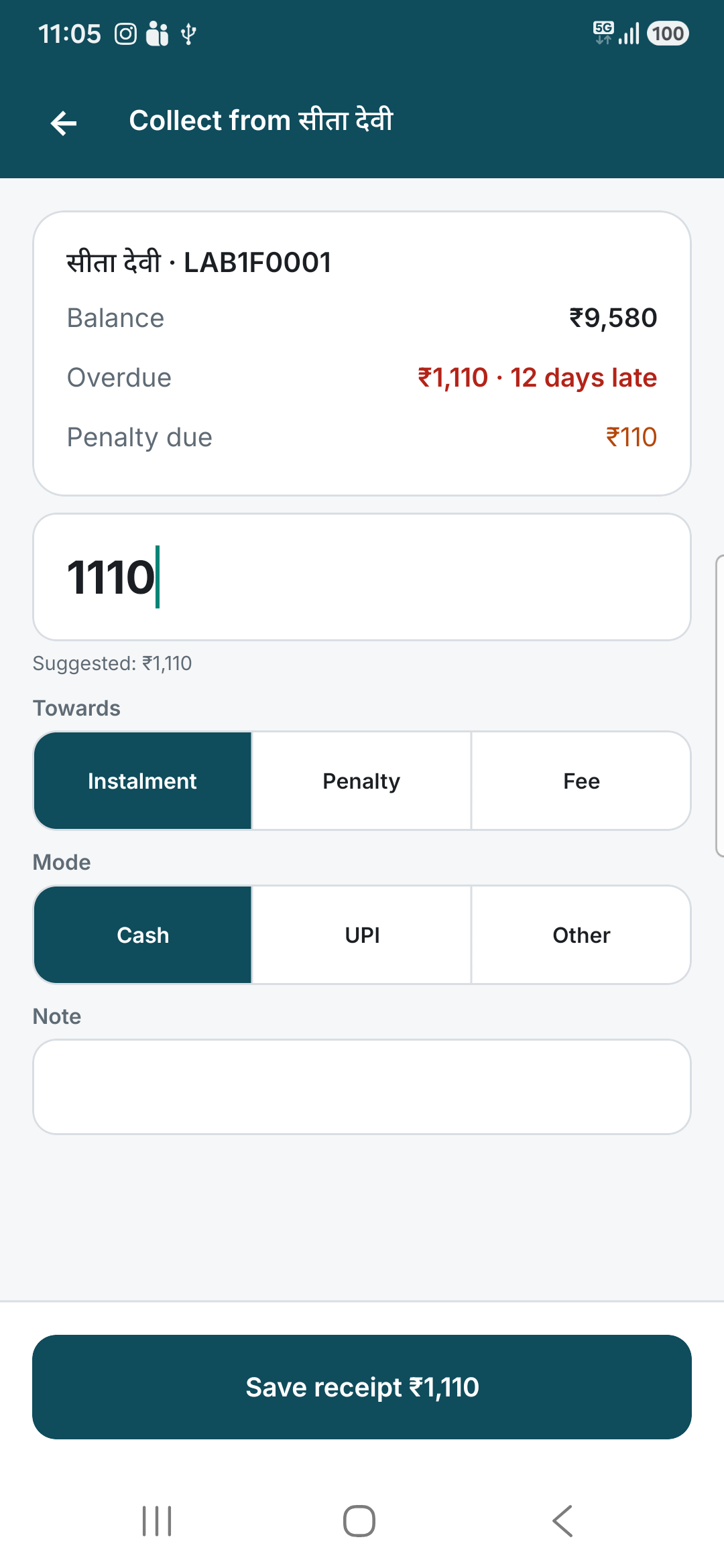
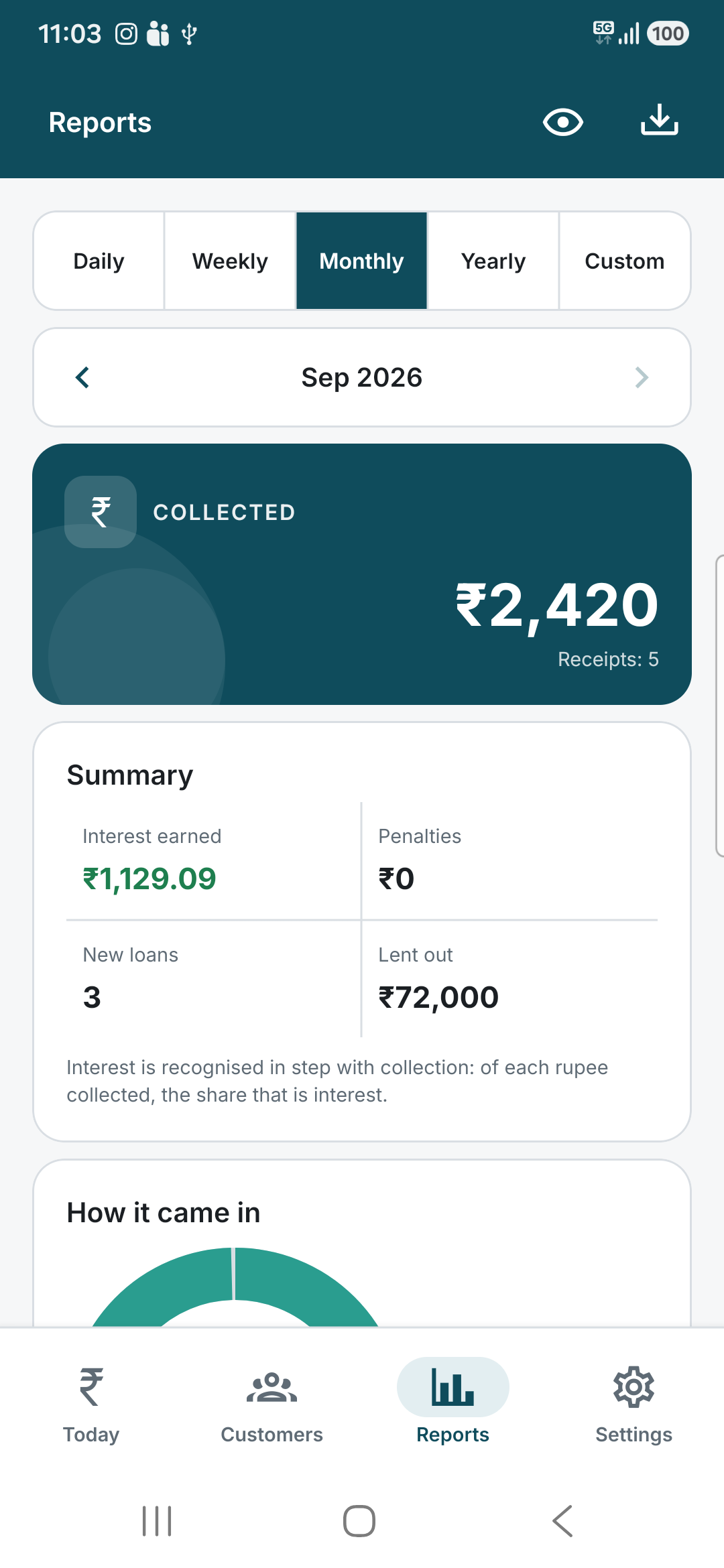
Balance, days late, overdue amount, penalty and profit are all computed from the receipts. Nothing derived is stored, so nothing can drift out of agreement.
Every rupee taken produces a numbered receipt. Send it on WhatsApp, share a PDF, or print it — no SMS credits, no per-message cost.
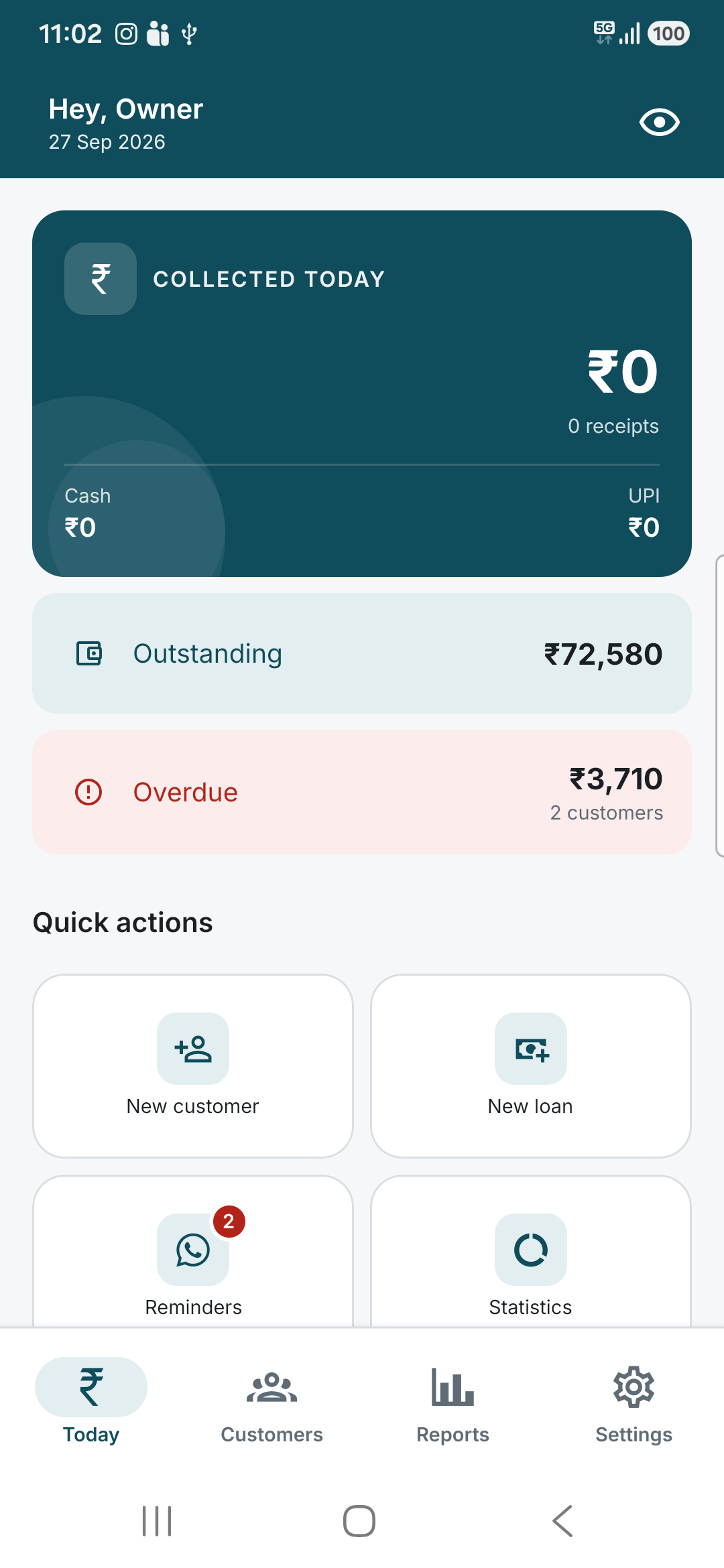
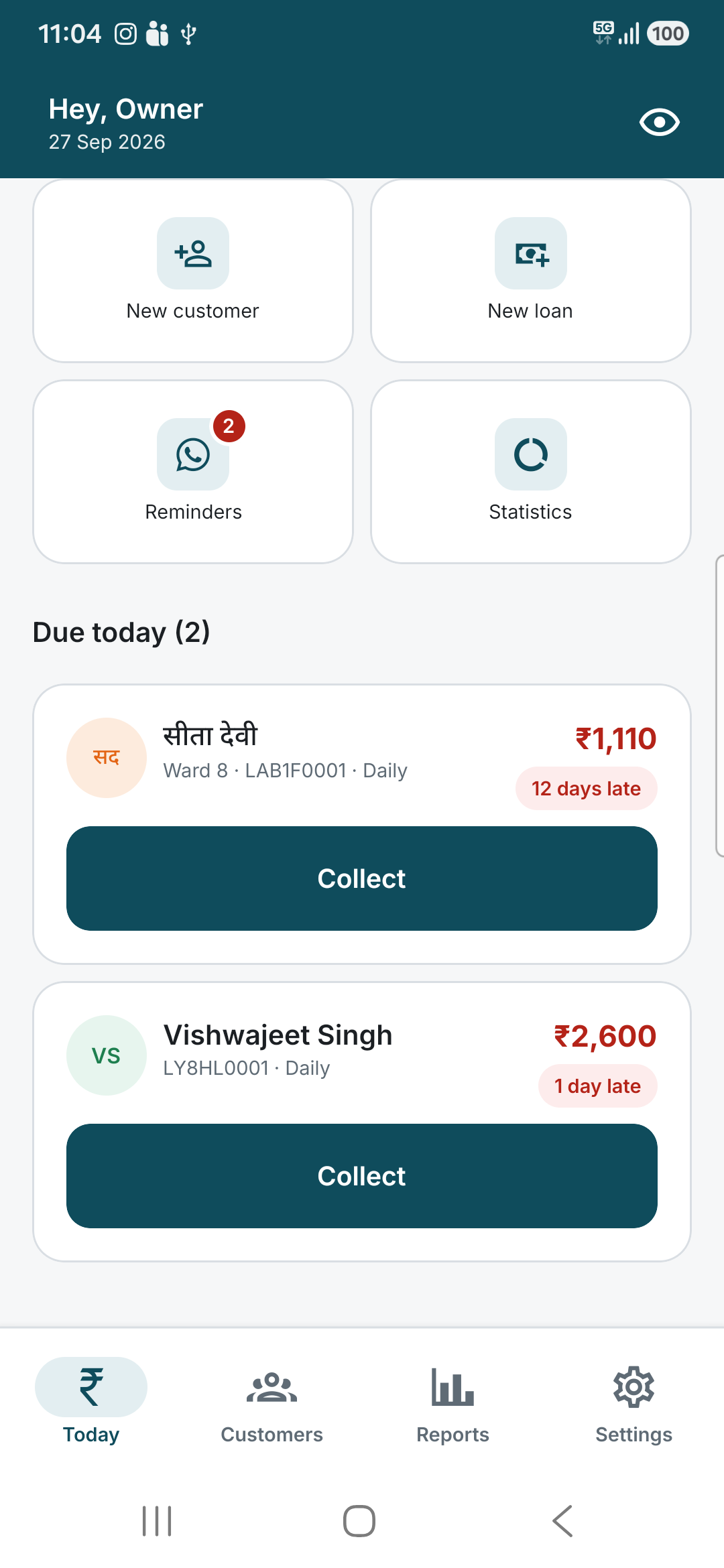
Open the app and the customers due today are already there, with the suggested amount filled in. Tap Collect, tap Save.
Add collection agents to your business. Their receipts carry their name, and everything merges into a single ledger you can see.
₹2,310.50 stays ₹2,310.50 through the calculation, the receipt and the export. Money is held as whole paise so nothing rounds away.
On screen
Four screens an agent uses every morning. Large figures, high contrast and big targets, because this is read at arm's length in daylight with one thumb.
Privacy
India has a well-earned suspicion of lending apps that harvest the phone they are installed on. JamaBook takes the opposite position, and enforces it rather than promising it.
Those permissions are stripped from the app when it is built. The operating system would refuse the request even if the code asked for it. Read the full privacy policy.
Questions
Yes. Collections, new customers, new loans and receipts all save with no connection at all. The app stores everything on the phone and syncs to the server when a network is available. Being offline never blocks a collection.
Yes. The free plan supports unlimited customers and shows small banner ads. A paid plan removes the ads. There is no per-customer charge and no limit on how many loans you record.
Pigmy collection is a daily deposit scheme common in Indian co-operative banking and daily finance, where an agent visits customers each day to collect a small fixed amount. JamaBook is built around exactly this pattern — a daily due list, small repeated instalments and a receipt each time.